
When are the UK Jobs and how could they affect GBP/USD?
UK Jobs report overview
The UK labor market report is expected to show that the number of people seeking jobless benefits increased by 4.1k in the three months to January, compared to an increase of 8.6k booked in the three months to December.
The unemployment rate is expected to remain at a record low of 4.3% during the period. Average weekly earnings, including bonuses, in the three months to Dec, are expected to hold steady at 2.5%, while ex-bonuses also, the wages are seen unchanged at 2.4% in the reported month.
Deviation impact on GBP/USD
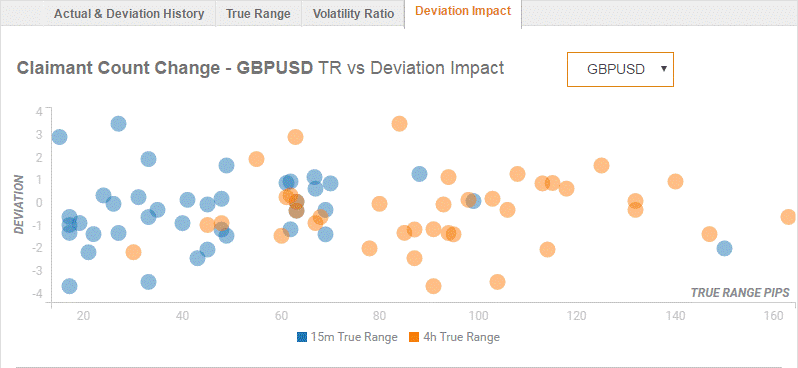
Readers can find FX Street's proprietary deviation impact map of the event below. As observed the reaction is likely to remain confined between 20 and 60 pips in deviations up to 2 to -4, although in some cases, if notable enough, a deviation can fuel movements of up to 85 pips.
How could affect GBP/USD?
A positive surprise in the claimant count combined with higher average earnings could take Cable back above 1.4000 levels. On a disappointing result, we could see the GBP/USD pair falling further towards the midpoint of the 1.39 handle.
Haresh Menghani, Analyst at FXStreet, notes, “… the latest price action now seems to suggest that bulls might continue to struggle near the 1.4020-25 region, around 38.2% Fibonacci retracement level of 1.3458-1.4345 up-move. However, a clear breakthrough the mentioned hurdle might trigger a short-covering rally towards the 1.4100 handle, coinciding with a short-term descending trend-line resistance. On the flip side, sustained weakness back below mid-1.3900s has the potential to continue dragging the pair towards 50% Fibonacci retracement level support near the 1.3900 handle.”
Key Notes
UK: Strong jobs growth to continue and wage growth to pick up - Nomura
UK unemployment rate to remain unchanged at 4.3% - TDS
About UK jobs
The Claimant Change released by the Office for National Statistics (ONS) presents the number of unemployment people in the UK. There is a tendency to influence the GBP volatility. Generally speaking, a rise in this indicator has negative implications for consumer spending which discourage economic growth. Generally, a high reading is seen as negative (or bearish) for the GBP, while a low reading is seen as positive (or bullish).